
- Overselling is an architecture problem, not a discipline problem.
- One pool that every listing draws from keeps quantities current across channels.
- Stock missing from a channel is lost revenue too; a synced pool lists it everywhere.
- Consolidate stock, connect channels, map listings once, then check the dispatch log.
- Optional fraud screening, on every channel except the digital marketplaces, lets you set your own threshold.
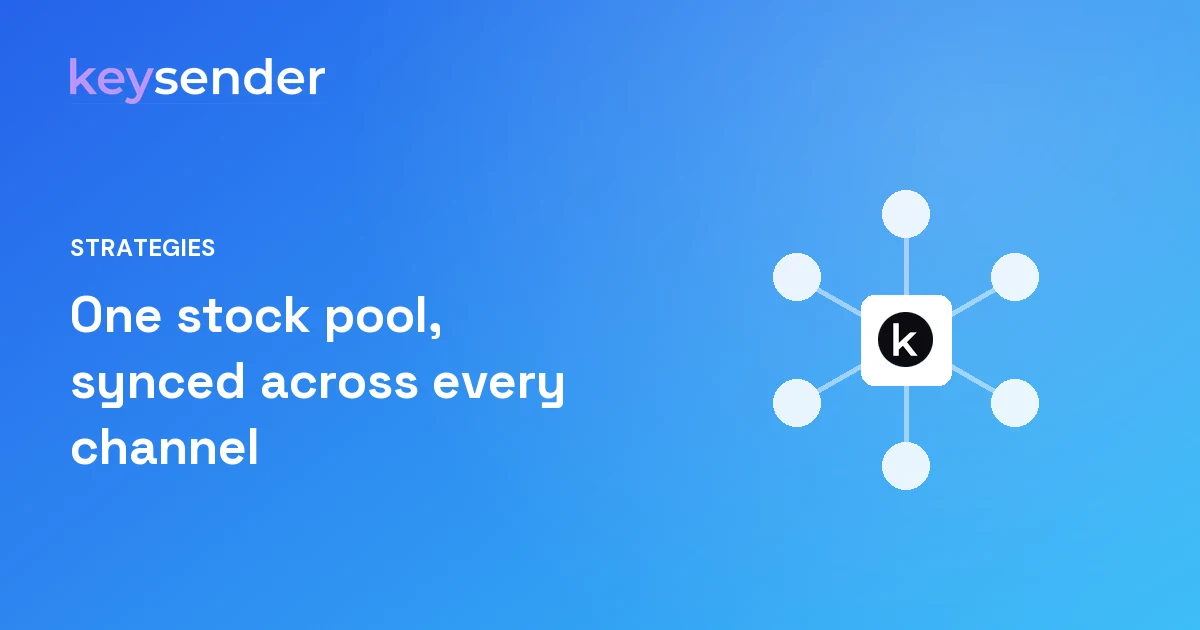
Overselling across marketplaces is an architecture problem, not a discipline one. When two channels both sell your last copy in the same minute, one buyer gets a cancellation that becomes an account defect. Keysender solves this with a single inventory pool every listing draws from, updated in real time as sales happen anywhere.
In the evolving digital marketplace, customers seek convenience and variety. Master the art of multichannel inventory management with Keysender to reach your customers wherever they shop.
Connect with multiple integrations
Exploit multiple sales channels for maximum reach and revenue. With Keysender's support, extend your brand presence across a multitude of platforms to accommodate diverse customer segments.
Automated buyer messages
Keysender sends buyer messages from your own templates as an order moves through its statuses, mainly on eBay and by email. Delivery itself is automatic, so you answer only the real questions.
Fraud prevention with Keysender
Fraud screening is optional, on every channel except the digital marketplaces, and a fraud review is 1 credit. Set your own fraud threshold per listing, and add buyers to a blacklist or whitelist.
Sales records and exports
Every order and dispatch across your channels is logged with a timestamp, and you can export transactions and inventory to analyse sales in your own tools.
Grow your sales efforts with Keysender
Discover how Keysender's comprehensive solutions can propel your selling efforts on eBay, Shopify, and more.
Why multichannel stock breaks without a system
The failure mode is always the same. You list 40 copies of a game on two marketplaces. Both sell copy number 40 within the same minute. One buyer gets a key, the other gets a cancellation, and the cancellation becomes a defect on your account. Multiply that by hundreds of SKUs and every new channel you add makes the spreadsheet math worse, not better. Overselling is not a discipline problem. It is an architecture problem.
The single-pool model
The fix is structural: one inventory pool that every listing on every channel draws from, with quantities updated in real time as sales happen anywhere. When a key sells on G2A, the available count on Kinguin, eBay, and your Shopify store updates before the next buyer checks out.
Coverage: The quieter half of sync
Overselling gets the attention, but the opposite failure costs just as much: stock that is live on one marketplace and simply missing from another. Every unit that is not listed on a channel where it could sell is silent lost revenue. A synced pool solves this direction too, because listing everywhere stops being extra work: the same inventory extends to each new channel you connect.
Setting it up in practice
- Consolidate your keys, codes, and files into one place before connecting channels.
- Connect every marketplace and store you sell on, then map listings to products once.
- Let quantities propagate automatically and spot-check the first day with the dispatch log.
- Add new channels from the same pool. Setup cost per additional channel should be minutes.
This is exactly the model Keysender runs, with stock sync across all 14 integrations. Start free with 20 credits and connect your first two channels: create your account.
Quick answers
What is the single-pool inventory model?
The single-pool model means one inventory pool that every listing on every channel draws from, with quantities updated in real time. When a key sells on one marketplace, the available count on your other channels, like Kinguin, eBay, and Shopify, updates before the next buyer checks out.
How does one stock pool help prevent double-selling?
Every listing draws from the same pool, so when a key sells on one channel, the available count on the others updates. That helps prevent two buyers being sold the same copy, the failure that turns into a cancellation and an account defect.
Why does missing coverage cost you money?
Coverage is the quieter failure: stock that is live on one marketplace but missing from another is silent lost revenue, since every unlisted unit could have sold. A synced pool fixes this too, because the same inventory extends to each new channel you connect, so listing everywhere stops being extra work.